
Loading...
Serving Alamo, TX and surrounding areas. (956) 948-8003
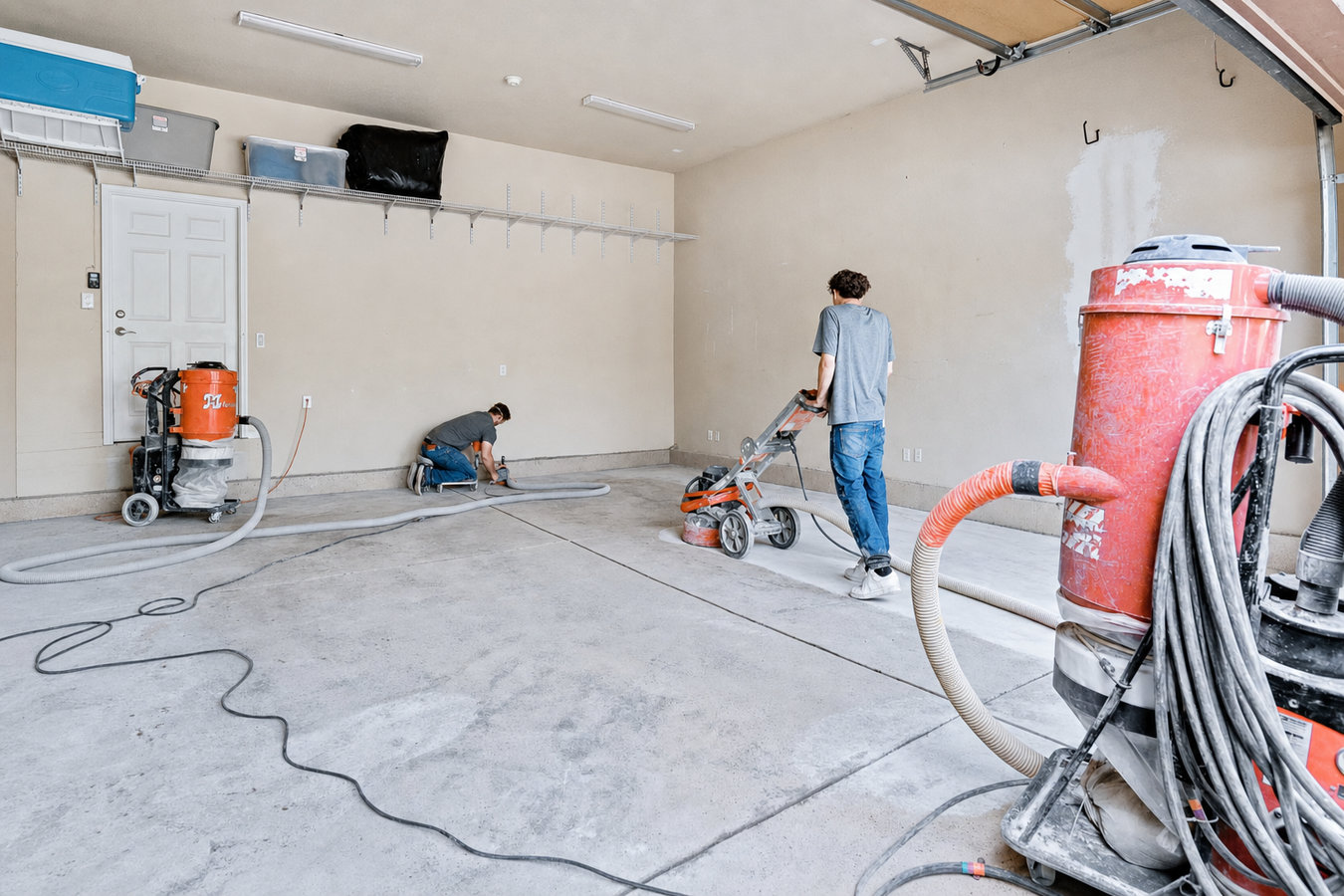
Old tile, vinyl, epoxy, and adhesive have to come off before any new floor finish will hold. We strip Alamo concrete slabs down to bare concrete with dust-controlled equipment and haul every bit of debris away when we leave.
Concrete floor stripping in Alamo, TX is the process of mechanically removing tile, vinyl, epoxy coatings, paint, and adhesive from an existing slab - leaving bare, clean concrete ready for whatever comes next - and most residential rooms are completed within a single day using walk-behind grinding and scarifying equipment.
Floor stripping is not demolition - the concrete slab stays in place. The work removes whatever is sitting on top of it so the slab can be refinished, recoated, or left exposed. This matters a lot in Alamo because a lot of floor failures in the Rio Grande Valley come down to new coatings applied over old adhesive that was never fully removed. A finish applied to a contaminated surface will not bond properly, and it will fail early no matter how good the product is. Once the old floor covering is off and the slab is clean and dry, the options open up considerably - from epoxy floor coatings to polished concrete to new tile.
In homes built before 1980 - which describes a meaningful portion of Alamo's housing stock - old tile adhesive may need to be tested before grinding begins, because some adhesives used in that era contained materials that require special handling. A contractor who brings this up on their own is one who is working responsibly.
Walk your floor and listen for a hollow thud when you step on certain tiles - that sound means the tile has separated from the concrete underneath. In Alamo, this is especially common because the clay soil shifts seasonally, putting stress on the bond between tile and slab. Once tiles start lifting or cracking in multiple spots, patching individual pieces rarely holds. Stripping and starting fresh is usually the more cost-effective path.
If you have already removed some flooring and the concrete underneath is covered in sticky brown or black residue that mops and cleaners cannot touch, that is old adhesive - and it has to be mechanically removed before any new finish will stick properly. Trying to coat or tile over it will cause the new floor to fail within a year or two.
In the Rio Grande Valley's humid climate, moisture can get trapped between old vinyl or tile and the concrete slab, creating conditions where mold grows underneath the surface. If you notice a persistent musty smell - especially in bathrooms or laundry rooms - stripping the floor down to bare concrete lets you see what is happening and address it properly.
Garage floors and utility spaces in Alamo often have epoxy or paint applied directly to the slab. Over time - especially with the temperature swings between hot summers and mild winters - these coatings peel, bubble, and chip. Once peeling starts in multiple areas, the only real fix is to strip the old coating completely and reapply from scratch.
What needs to come off determines how we approach the job. Thin coatings like paint or a failed epoxy layer come off quickly with floor grinders and vacuum attachments. Tile removal is more involved - we use scarifying equipment to chip away the tile and the adhesive layer underneath in sections. Mastic adhesive, particularly older black mastic common in Alamo homes from the 1960s and 1970s, requires specific grinding approaches to remove without spreading it further. For garage floors where the whole epoxy system has failed, we strip back to bare concrete and then hand the slab back in the same condition we would want to receive it. After stripping, we test the slab for moisture before recommending any next steps - because in Alamo's humid climate, skipping that step can cause the next coating or adhesive to fail for the same reason the last one did. For homeowners who want to move directly to a new surface, we can coordinate with our concrete grinding and surface preparation process to get the slab to the right profile for the next finish.
Dust control is part of every job. Concrete grinding creates fine dust that can irritate lungs if not managed properly - OSHA has specific requirements around silica dust exposure on job sites, and we use vacuum-attached equipment and wet-grinding methods where applicable to keep dust levels low for both the crew and the homeowner. We also handle all debris removal and dispose of it at a licensed facility in compliance with Texas Commission on Environmental Quality rules for construction waste.
Best for garage floors and utility spaces where a failed coating system needs to come off before a new one is applied.
Suited to kitchens, bathrooms, and living areas where tile has lifted, cracked, or needs to be replaced with a new floor type.
For older homes in Alamo where sheet vinyl or linoleum needs to come off, including cleanup of the adhesive layer underneath.
Ideal for renovation projects where multiple layers of flooring have been applied over the years and need to come off to get back to bare slab.
Alamo has a significant share of homes built between the 1960s and 1990s - an era when tile adhesives that are now considered problematic were common. Before any stripping work begins in one of these older homes, the adhesive should be tested. That is not an optional step - it is a basic safety precaution, and any contractor who skips the conversation is cutting a corner that can create real problems for your family. The other local factor that shapes this work is moisture. The Rio Grande Valley's humidity, combined with irrigation from the surrounding agricultural land, means concrete slabs in Alamo often hold more moisture than slabs in drier parts of Texas. A floor that is stripped and handed off without moisture testing can cause the next coating or adhesive to fail early. Homeowners in McAllen and Pharr face the same conditions throughout this part of the Valley.
The clay-heavy soil in Hidalgo County also means that when the floor covering comes off, the slab may show cracks or uneven spots that were hidden underneath for years. That is not a sign the stripping was done wrong - it is just what the slab looks like after decades of soil movement. A good contractor points these out during the final walkthrough and tells you what, if anything, needs to be addressed before the next finish goes down.
Call or message us with a description of the space and what is on the floor. We schedule a free on-site visit to measure the area, assess what needs to come off, and give you a written estimate. If your home was built before 1980, we will ask about the adhesive and whether testing should happen before we start.
Before the crew arrives, clear the room completely - furniture, appliances, rugs, everything. The contractor will seal off adjacent rooms with plastic sheeting to keep dust from spreading. The work area needs to be fully accessible so the crew can bring in their equipment and work efficiently.
The crew brings in their equipment and works in sections across the floor. Depending on the size of the space and what is on the floor, this takes a few hours to a full day. It is loud and there will be dust even with vacuum attachments - plan to keep children and pets away from the work area for the day.
Once stripping is done, the crew removes all debris and vacuums the space. We test the slab for moisture before handing it back to you - important in Alamo's humid climate. Then we walk the floor with you together so you can see the result and raise any questions before we leave.
We come out, look at the floor, and give you a written quote. No commitment required and no surprise fees for debris hauling.
(956) 948-8003For homes built before 1980, we bring up the adhesive testing question at the estimate visit - before work begins. It adds a small cost and a few days to the timeline, but it protects your family and is the responsible way to approach older Alamo housing stock. We would rather have that conversation early than discover a problem mid-job.
We use vacuum-attached grinders and wet-grinding methods to keep silica dust levels low for both the crew and the homeowner. You should be able to stay in your home during the work, and the rest of your house should not look like a renovation zone when we are done.
Tile pieces, old adhesive, and concrete dust all have to go somewhere. We load it, haul it, and dispose of it at a licensed facility in compliance with Texas Commission on Environmental Quality rules for construction waste - which matters in Hidalgo County where debris has to go to approved sites.
In Alamo's humid climate, skipping moisture testing after stripping is a common reason the next finish fails early. We test the slab before recommending any follow-on work so that whatever goes on next - whether it is epoxy, new tile, or a concrete finish - bonds the way it is supposed to and holds up.
We have stripped floors in Alamo homes of every era, and we know the difference between a job done fast and a job done right. When you call us, you get straight answers, a crew that shows up prepared, and a slab that is genuinely ready for whatever comes next.
Apply a durable epoxy finish to your freshly stripped slab for a long-lasting, easy-to-clean surface in garages and utility spaces.
Learn MoreAfter stripping, concrete grinding profiles and levels the slab surface so any new coating or adhesive bonds properly and lasts.
Learn MoreFall and winter are the best time to schedule in the Valley - call or request a free estimate now before the schedule fills up.